
2nd July 2026 - Cllr Georgina Heritage 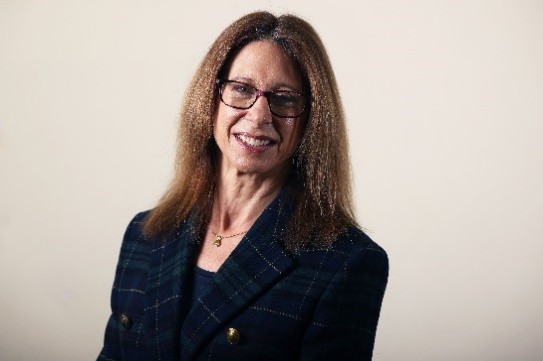
Local Matters – What I’ve been doing
Following my visit to Mill Lane School last month I’m really pleased to report that that the planned works to the classrooms are now on track, and the school was visited again very recently by our cabinet member for Children and Young People, Cllr Sean Gaul, with OCC’s Director of Property and Assistant Director for Education. The purpose was to review progress, confirm delivery timelines and ensure alignment with the school’s development priorities. Encouragingly, despite earlier delays at the start of the year, the Property team has successfully recovered the programme and is now operating within the originally agreed timelines, with no anticipated impact on overall delivery. The phasing of internal refurbishment works will be developed in partnership with the school during the design stage. This will determine sequencing, handover of refurbished areas, and integration with the new build. This may influence interim milestones but the overall programme remains on track for full completion by September 2027. Sean and the team will also explore maximising delivery during school holiday periods, while maintaining some flexibility to progress works during term time where feasible (and as agreed with the school).
I’m very pleased that the visit provided assurance that this vital project is being well-managed, is back on track, and is progressing with a clear focus on timely and effective delivery for the school.
Like many other residents in the Chinnor division, my evenings are often disturbed by gangs riding very noisy motorbikes tearing up and down our roads. I recently wrote to one of our local officers in the Thame Neighbourhood Police team about this nuisance and asked what action is being taken for our residents. Last week I received the following response:
“As you mention, there is an ongoing issue with anti-social off-road motorbikes around Chinnor and the surrounding area, which we are aware of. I, along with the wider Thame Neighbourhood Police Team, will be the best policing point of contact for this. It’s a wider issue across the Thame Neighbourhood area with hotspots for similar anti-social behaviour around Wheatley, Barton and Shotover, and across the Thames Valley area in general.
When there was a spike in reported incidents a few months ago, we identified 3 of the lead persons involved and issued formal warning notices for anti-social use of a vehicle under Section 59 of the Police Reform Act 2002. Since then, there has been a downtick in reported incidents; within the past 2 weeks we have only received a single reported about the matter, which accounts for only 1 of 297 incidents reported to us in that time period. Local officers remain aware of the issue and will stop check and conduct relevant enforcement actions on vehicles involved in the pattern of anti-social behaviour on patrol. However, in terms of a bidding for the assistance of specialist resources such as drones or pursuit trained units to assist in proactive enforcement attempts then we require evidence of significant ongoing community impact such as substantial quantities of reports indicating a community impact so as to persuade supervising ranks to allocate the necessary specialist resources and time. Unfortunately the number of reported incidents has declined from this threshold, and, whilst we suspect incidents are still occurring, without the statistical data to demonstrate this we have little prospect of receiving authorisation or support in proactive enforcement operations, nor would it be proportionate compared to other ongoing problems in the wider neighbourhood area.
We would encourage members of the community to continue reporting incidents when witnessed as it assists us in identifying peak times of incidents and hotspot locations to conduct intelligence-led patrolling and demonstrates that the pattern of anti-social behaviour is having a meaningful detrimental impact on the community.”
Despite warnings being given and only one police report in a recent two week period, I know these motorbike gangs were active again only earlier this week. Please could I ask that parish councillors and residents report these incidents when they happen, so that TVP can build the data they need to take further action? If this antisocial activity is impacting our communities as much as I believe it is, it’s important that we make the police aware of it.
I’ve received a lot of correspondence this month on the new Quiet Lanes pilot scheme and particularly with reference to AR&KB Parish Council’s expression of interest regarding Kingston Hill. I have reassured residents who’ve contacted me that the proposed project hasn’t started yet and no parish council has committed to anything but have just submitted an expression of interest, which OCC officers are following up. Even if the proposals go ahead, the pilot programmes would be on a trial basis rather than permanent, but pilots will not go ahead without public support. The scheme involves lots of scoping work and data gathering, which absolutely includes a formal consultation with residents. I know parish councils take their responsibility to residents very seriously and will be very keen to obtain feedback from the community.
None of these projects will be pushed forward unilaterally. There are lots of parish councils interested in exploring the idea, but at this stage it really is just an exploration. Both OCC and parish councils will only want schemes to progress if they work for residents.
30th June was Full Council at OCC, and it was the most positive OCC full council meeting I’ve attended to date, with groups across the political spectrum collaborating so that all three motions received cross-party support (with the councillor representing Reform being the exception). The three motions covered the following subjects:
· Supporting action to end dangerous pavement parking;
· Working to improve home adaptations by reviewing how Disabled Facilities Grants can better support those who need it;
· Increased investment in climate adaptation, including more local-led action.
I also took the opportunity to submit a question to the cabinet member for Transport:
“Residents in the rural villages of the Chinnor division desperately want to see improvements to transport, particularly to get to nearby towns and villages for health appointments, shopping, schools and other amenities. Many residents effectively feel cut off, unless they can drive and own a car. I understand a “Plan for Bus” is being developed. Please could you tell me how my rural residents might benefit from this, and how they will be able to input?”
The response I received was:
“The Council has been working to improve rural bus services across Oxfordshire, by reinstating services to all parishes that have populations of over 500. Within the Chinnor division we have reinstated links from Lewknor, South Weston, Postcombe and Towersey to Thame whilst maintaining the existing bus routes throughout the division.
The OxBus 2040 Plan for Bus will set out our long-term vision for buses in Oxfordshire to 2040. It will be a high-level document and is still in the early formation stages.
We presented this item to Place Overview and Scrutiny on Wednesday 24th June as an early-stage item so that the committee can help shape and influence the approach and emerging content. You can read more here: Agenda for Place Overview & Scrutiny Committee on Wednesday, 24 June 2026, 10.00 am | Oxfordshire County Council
We know that connecting rural communities is important and so this will be factored into our ambitions. We are collecting views already from a range of different groups to feed into the plan and all residents will have the opportunity to respond to the public consultation planned for later this year.”
I followed up with a supplementary question, noting that the existing links to Thame were infrequent and not adequate to make a positive difference for most residents, and I received assurance that the rural networks would be a priority to Cllr Epps. I look forward to following this up in the public consultation, which I hope will elicit a lot of local engagement.
Minutes of the meeting and follow-up comms haven’t yet been published but you can see the agenda and papers for the council meeting here: Agenda for County Council on Tuesday, 30 June 2026, 10.30 am | Oxfordshire County Council
On the subject of attending meetings at County Hall, I’ll also just comment that one of the first things Cllr Epps did as cabinet member for Transport was to stop allowing councillors to park at County Hall, which I very much approve of. No members of the Lib Dem group parked there anyway (except one councillor who is a blue badge holder), and it’s absolutely right that councillors should not be allowed special parking privileges. The new restriction means that only disabled badge holders and staff who require vehicle access for operational reasons will have access to the car park in front of County Hall.
As well as full council I’ve also sat on the Scrutiny committees for People (Adults’ Services) and Education & Young People. The latter included work on the The Special Education Needs and Disabilities (SEND) Strategy. Representatives from parents and carer groups, education, health, and social care have worked together as the Local Area Partnership (LAP) which has co-designed a new SEND strategy. The partnership’s ambition for children and young people with SEND is that they are valued, included, supported early, and are able to thrive in their communities and prepare confidently for adulthood. The plan provides a framework for how the LAP will work together to improve experiences and outcomes for children, young people and their families.
The consultation for this has just been launched and remains open until 3rd August 2026. To contribute, please follow this link: Draft SEND Strategy 2026 - 2029 consultation | Let's Talk Oxfordshire
Finally, I was delighted to visit Aston Rowant Cricket Club in June and am grateful to Tim and Andy for their hospitality. I was immensely impressed by the fantastic work of this community enterprise and its dedicated volunteers, and the positive impact this has in our area. It was especially a joy to see the coaching for children of all ages and abilities, and to see people of all generations and backgrounds coming together to enjoy the facilities. It was also a pleasure to meet professional cricketer Amelie Munday, Director for Women and Girls. There was an amazing energy at this inclusive club and I very much hope to support it in future. I also encourage anyone looking for a volunteer opportunity to get in touch with them!
Council Matters
A review of speed limits on rural roads is being widened and ramped up, which County and Parish councillors are being consulted on.
Since 2025, Oxfordshire County Council has been reviewing speed limits and safety on its network as part of its Vision Zero programme to eliminate deaths and serious injuries on the network. The review looks at whether existing speed limits are appropriate, using evidence such as collision data, road layout and how routes are used.
This has led to speed limit reductions on some stretches of road, including lowering national speed limit sections to 50mph or 40mph, alongside other measures. Around 60 more schemes are now coming forward in 2026-27 as part of the Vision Zero programme.
Stakeholder consultation is now beginning and parish councils should have received an email about this. I would like to work with Chinnor division parish councils regarding my own submission, especially as some roads have already been highlighted to me as problem areas (like Kingsey Road for example). I always appreciate any feedback that parish councils think might be relevant to my own contribution.
Following the stakeholder consultation, residents will also have the opportunity to contribute to the consultation.
I expect most people have heard through the media about OCC securing a High Court Injunction to prevent the continued unauthorised hanging of flags on or near the public highway, but if not you can read more about it here: Council secures injunction to protect communities
For the avoidance of any doubt, the High Court action was never about the council having a problem with flags. Everyone is legally entitled to display flags on their own property, and I hope many of us are doing so in support of the World Cup. The situation prompting legal action concerns an organised group who have been dangerously climbing ladders on highways to unlawfully erect flags on lamp posts (which are not personal property), and then intimidating OCC staff who were carrying out their duty to remove the items from public infrastructure. Intimidation and threats had also been made directly to members of the public and councillors, much of which had to be reported to the police. I hope you agree with me that this sort of behaviour doesn't demonstrate pride in our country. Flying the national flag safely and lawfully on one's own property without abusing other people or threatening highways safety is surely the responsible way to demonstrate patriotism.
We already knew that many members of the Raise the Colours organisation are dangerous individuals with extensive criminal histories, and seemingly with a newfound purpose to create havoc and division in our communities. This was further reinforced when it was confirmed a few days ago that their Wallingford member was due to stand trial for making indecent child images (categories A,B and C). I’m very glad we held our nerve at OCC, because this was always about the people involved and their intent, and never about the council having a problem with our national flag.
With potholes having been a particular problem and priority this winter, a trial has taken place to improve the repair process in Oxfordshire in future. OCC and highways contractor M Group used Wildmere Road in Banbury as a test site to trial 15 different methods of filling in potholes or ‘patching’ minor defects. Some of these methods are already used in Oxfordshire, while the others were new technology.
Wildmere Road was closed and a 700-metre stretch was divided into sections. Each section had a different type of pothole or patch repair carried out to get a direct comparison of the various methods. Wildmere Road will be monitored regularly over the next two years to allow comparisons of the type of repair, equipment, material, and labour used, and the time taken. This will include an understanding of the potential results, longevity of repairs, waste generated, carbon impact, use of recycled content and productivity that may be achievable.
As cabinet member Cllr Liz Leffman was quoted, “Technology is changing all the time and it is important to test the latest products to maximise value for money when it comes to highway maintenance”.
Finally, I would like to offer a recent comms release regarding the Thames Valley’s current position on the Government’s devolution plans for the area (though with the Government’s upcoming leadership changes it’s very possible there might be a change of direction and that Andy Burnham might support a Mayoral Strategic Authority for our area):
Council Leaders from Oxfordshire and Windsor and Maidenhead have rejected the Government's attempt to force a shotgun marriage between Berkshire, Oxfordshire and Swindon. They said Whitehall risks undermining the very principle of local decision-making it claims to support
Council leaders across the Thames Valley were originally invited to develop proposals for a Mayoral Strategic Authority, bringing significant devolved powers, infrastructure funding and accountability. However, after months of engagement in what was presented as a locally-led process, Ministers withdrew the prospect of a mayoral deal and instead offered a Foundation Strategic Authority on a predetermined geography, with substantially fewer powers, resources and benefits for local communities.
The Government has now written to local leaders presenting an FSA including Oxfordshire, Berkshire and Swindon as the sole route available for progressing devolution in the region. However, the Liberal Democrat leaders remain unconvinced that the Government has made a compelling economic case for Swindon's inclusion within the proposed geography, citing limited alignment in public services, governance arrangements and existing strategic partnerships.
Oxfordshire and Berkshire have already demonstrated their commitment to devolution through two expressions of interest and remain ready to proceed. The concern is that what began as locally-led negotiations has increasingly become a centrally-directed process, with ministers changing the terms of the discussion and narrowing the options available.
Given the Government's expectation that any Strategic Authority can only proceed with consensus from all local authorities, it was not possible to reach agreement across all participating councils.
Councillor Tim Bearder, Leader of Oxfordshire County Council, said:
"I support devolution. I support giving local communities more control over their own destiny. What I do not support is Whitehall dictating a geography that makes little sense and then telling local leaders it is our decision.
We were originally invited to discuss a Mayoral Strategic Authority. That offer has now been downgraded to a Foundational Strategic Authority with very limited powers, very limited funding and no meaningful answer to the question of how it will improve the lives of Oxfordshire residents.
"The natural Thames Valley geography is Oxfordshire, Berkshire and Buckinghamshire. Buckinghamshire's decision not to participate should not mean that Oxfordshire is forced into a different arrangement simply to solve a problem elsewhere.
Swindon is not part of the Thames Valley. It is not part of Thames Valley Police, it is not part of our Integrated Care Board, and its economic and public service geography is fundamentally different. The Government's own rationale appears to be based on administrative convenience rather than genuine local coherence."
Cllr Simon Werner leader of Windsor and Maidenhead also feared that the proposed arrangement would create another layer of governance with additional taxation powers without providing the investment needed to support the region's growing population. He said:
"I have supported devolution throughout this process because I believe decisions should be made closer to the communities they affect.
The difficulty is that, over time, the proposal has become increasingly dependent on promises about what might happen in the future, while offering very little that is tangible to my residents today.
The Government will cover the initial set-up costs, but the ongoing costs would ultimately fall on local residents through council tax. We are told additional funding and powers may follow in future spending reviews, but local leaders have a responsibility to make decisions based on what is actually on the table, not on what a future Government may or may not choose to deliver.
Residents would rightly expect us to scrutinise any proposal that creates a new layer of governance. We cannot simply ask taxpayers to take it on trust that significant powers, infrastructure funding and economic benefits will arrive at some point in the future.
Throughout this process we were told that devolution would be locally-led, yet when it came to the final proposal, councils were effectively presented with a single geography and asked to accept it.
I remain supportive of devolution, but devolution must offer real powers, real benefits and real local choice. In its current form, this proposal does not meet that test."
The Minister's letter highlights a number of initiatives available to mayoral authorities, including transport funding, place-based budgeting pilots and additional economic powers. However, Oxfordshire argues that many of these benefits are attached to Mayoral Strategic Authorities rather than the much more limited FSA model currently being offered.
Councillor Bearder added:
"If the Government wants us to support devolution, it should trust local leaders to determine the most sensible geography and offer a package that genuinely transfers powers and resources from Whitehall.
Devolution should be about empowering local communities, not about central government drawing lines on a map to suit its own political goals.
Oxfordshire remains willing to engage constructively. We support meaningful devolution and we remain open to a Foundational Strategic Authority as a stepping stone towards a future mayoral arrangement.
Liberal Democrat leaders remain willing to engage constructively. Berkshire and Oxfordshire are among the country's most economically significant regions, home to world-leading science and technology clusters, internationally recognised research institutions, thriving businesses, market towns and rural economies. Together they have enormous potential to deliver sustainable and inclusive growth if given the right powers and investment”.